
Wet vs Dry Scrubbing Systems: Which Is Better?

Jun 03, 2026
閲覧数: 7

When it comes to industrial air pollution control, choosing between wet and dry scrubbing systems can significantly impact your operational efficiency, compliance, and bottom line. Both technologies effectively remove harmful pollutants from exhaust streams, but they work in fundamentally different ways and suit different applications.

This comprehensive guide examines the critical differences between wet and dry scrubbers, helping you make an informed decision for your facility's air quality needs.

Table of Contents

  1. What Are Scrubbing Systems?
  2. How Wet Scrubbers Work
  3. How Dry Scrubbers Work
  4. Key Differences Between Wet and Dry Scrubbers
  5. Efficiency Comparison
  6. Cost Analysis: Initial Investment vs Operating Expenses
  7. Maintenance Requirements
  8. Industry Applications and Use Cases
  9. Environmental Compliance Considerations
  10. Making the Right Choice for Your Facility

1. What Are Scrubbing Systems?

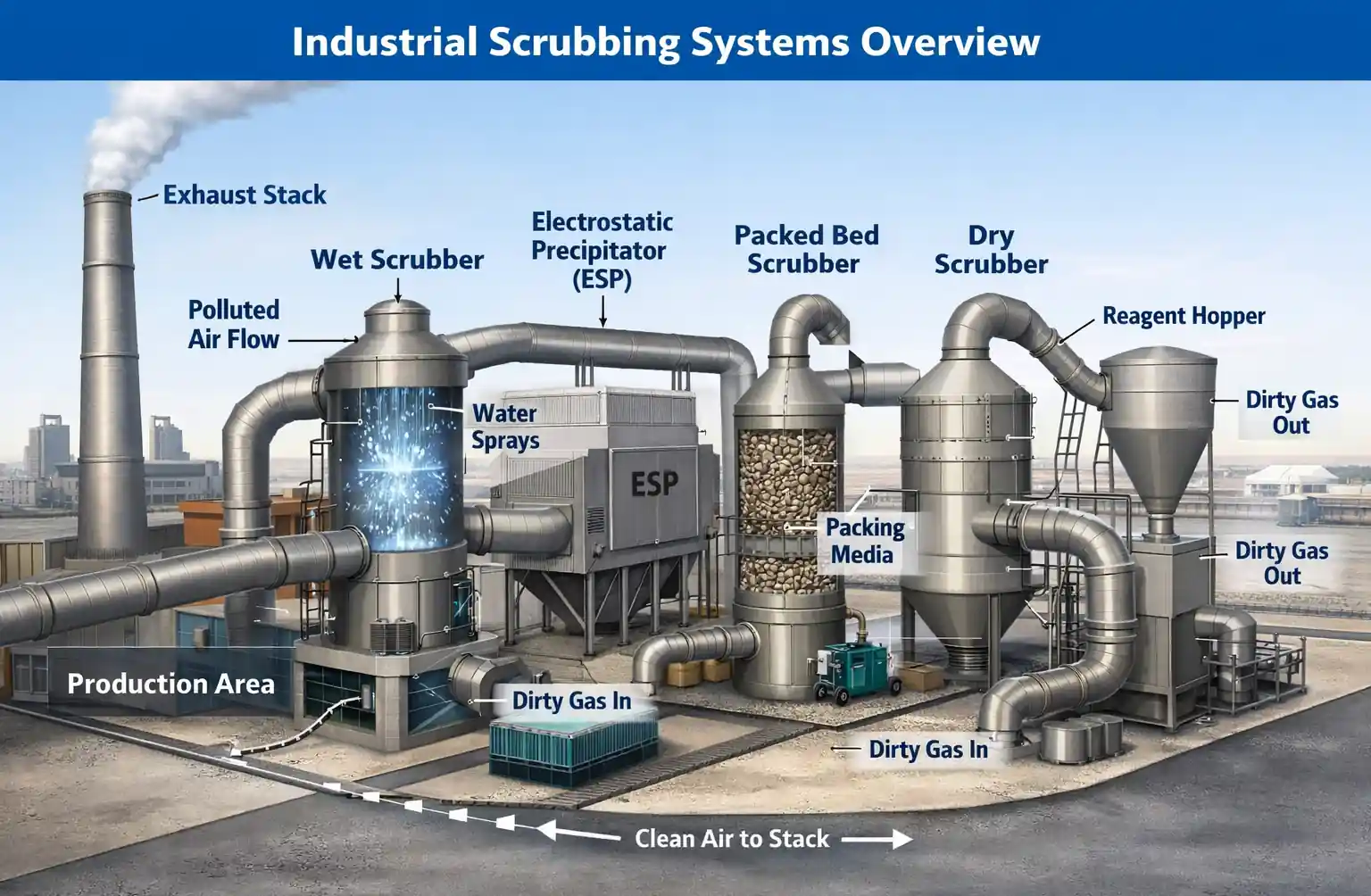
Scrubbing systems are air pollution control devices designed to remove harmful pollutants from industrial exhaust streams before they're released into the atmosphere. These systems play a vital role in helping facilities comply with environmental regulations while protecting air quality.

1-industrial-scrubbing-systems-overview

Scrubbers effectively control multiple types of pollutants including particulate matter (PM), volatile organic compounds (VOCs), acid gases like sulfur dioxide (SO₂) and hydrogen chloride (HCl), and other gaseous contaminants. Industries ranging from chemical processing and power generation to cement manufacturing and pharmaceuticals rely on scrubbing technology to meet emission standards.

The fundamental distinction between wet and dry scrubbers lies in their operating principle: wet scrubbers use liquid solutions to capture pollutants, while dry scrubbers use solid reagents to neutralize harmful gases.

2. How Wet Scrubbers Work

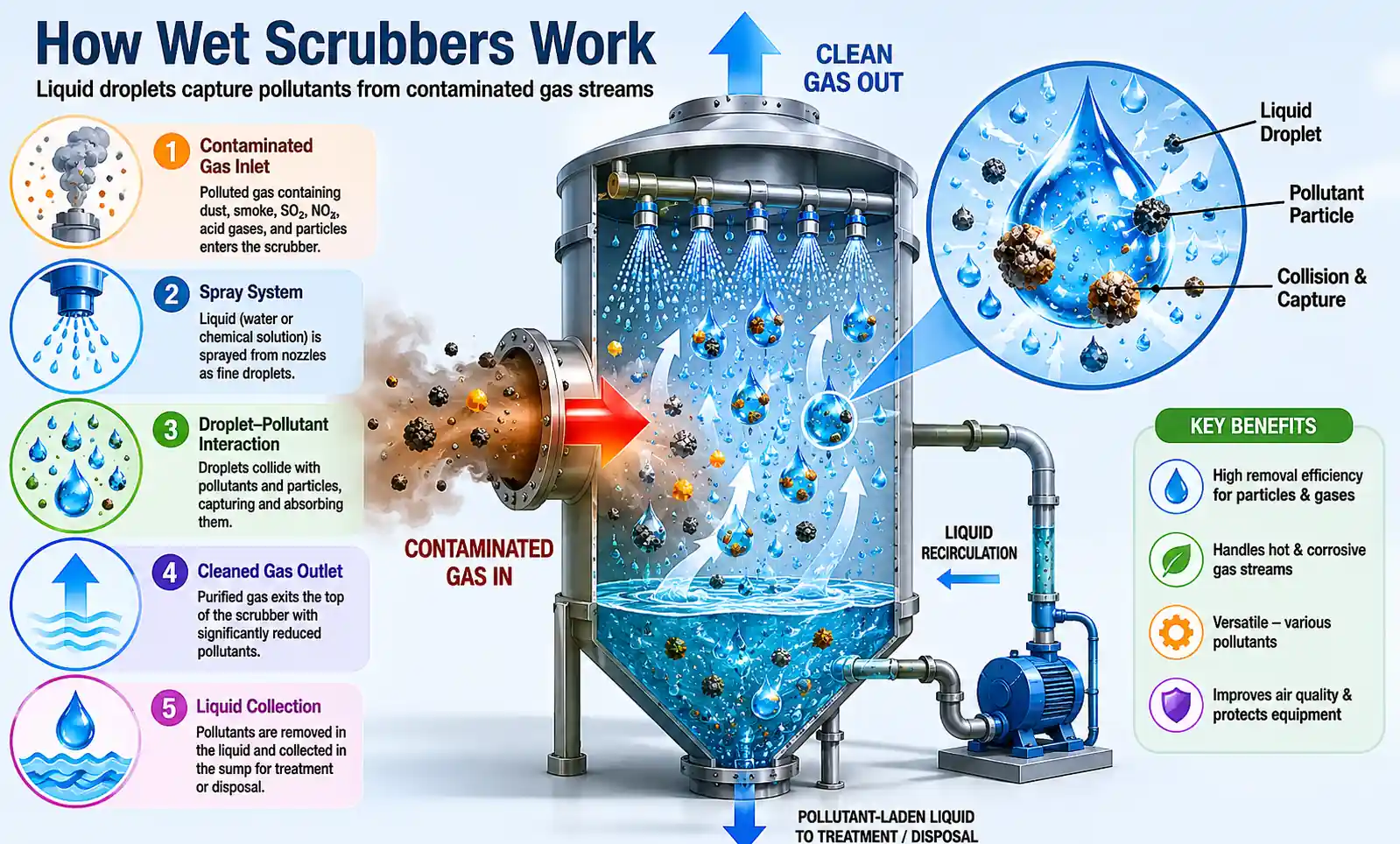
Wet scrubbers use liquid—typically water or chemical solutions—to capture and remove pollutants from industrial exhaust gas. The contaminated gas stream passes through a scrubbing chamber where pollutants contact the liquid through various mechanisms.

2-wet-scrubber-operation-diagram

The scrubbing process relies on impingement with liquid droplets. Smaller droplets provide more surface area, increasing scrubbing efficiency. Common wet scrubber designs include:

  • Spray tower scrubbers: Use nozzles to create fine liquid droplets
  • Packed bed scrubbers: Force gas through packing material wetted with scrubbing liquid
  • Venturi scrubbers: Accelerate gas through a narrow throat, creating turbulence that enhances contact between pollutants and liquid

Wet scrubbers are particularly effective for water-soluble pollutants. They can handle chemical impurities, vapors, odors, aerosols, fine particulate matter, and complex mixtures. They excel at removing acid gases and can manage high-temperature and high-humidity environments.

The scrubbing liquid absorbs or reacts with pollutants, creating a liquid waste stream that requires proper treatment and disposal. Most wet scrubbing systems achieve particulate collection efficiencies exceeding 95%, with some systems removing over 99% of airborne particulate matter.

3. How Dry Scrubbers Work

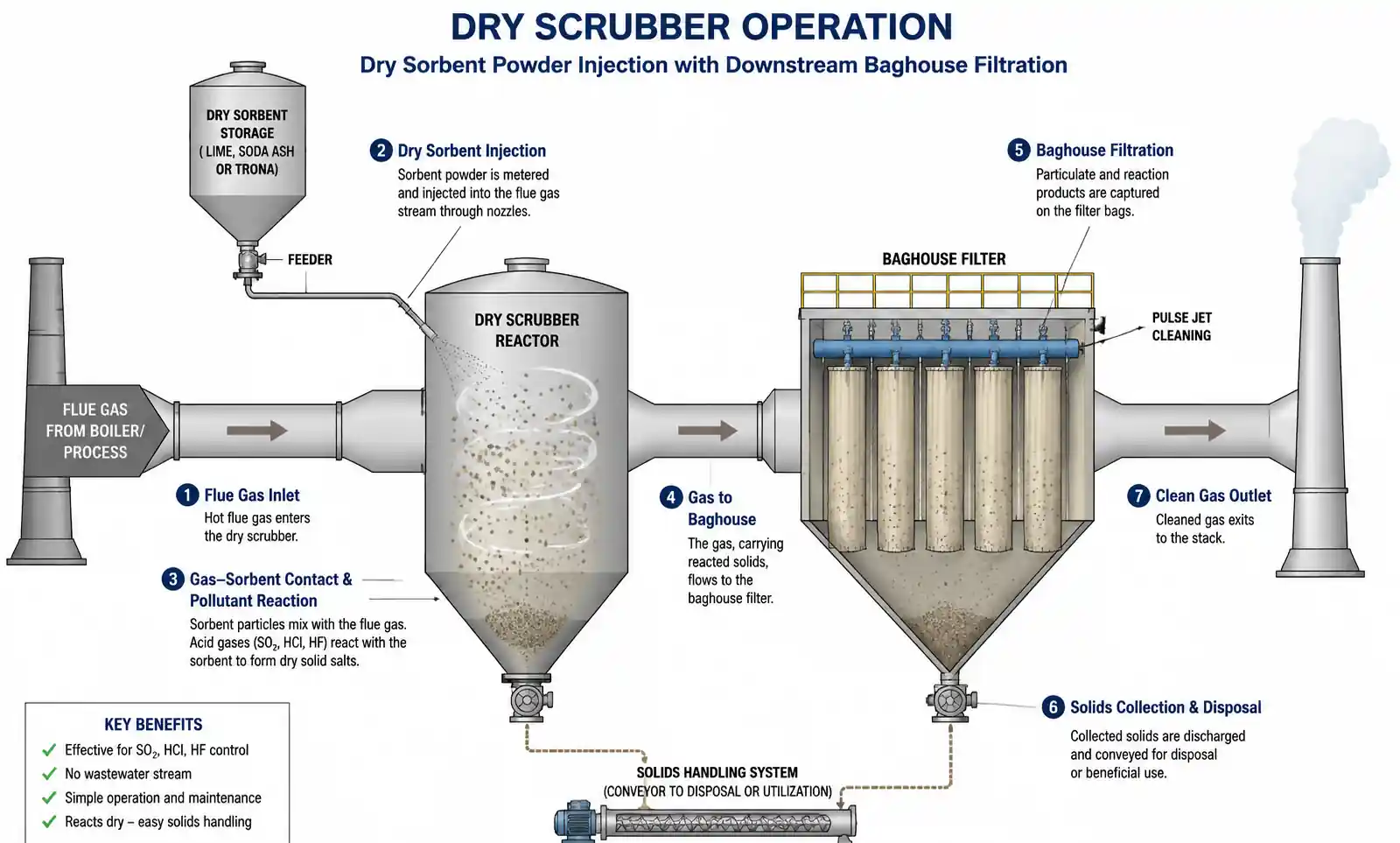
Dry scrubbers, also called dry sorbent injection (DSI) systems, remove harmful gases from industrial exhaust by forcing polluted air into contact with dry or nearly dry chemical powders that neutralize those gases.

3-dry-scrubber-system-process

Instead of using liquid, dry scrubbers employ powdered or granular reagents—commonly lime, sodium bicarbonate, or activated carbon. These dry materials chemically react with pollutants to form solid byproducts that can be captured by downstream filters or baghouses.

The dry scrubbing process typically involves:

  1. Injecting dry sorbent material into the exhaust stream
  2. Allowing chemical reactions between the sorbent and pollutants
  3. Capturing the reaction products and unreacted sorbent in fabric filters or cyclones

Dry scrubbers produce no liquid waste, making them advantageous in water-scarce regions or facilities where managing liquid waste presents challenges. They're particularly suitable for moisture-sensitive processes and applications where water use must be minimized.

The dry sorbent injection market is growing rapidly, with projections showing 7.6% CAGR growth through 2033, driven by emission control regulations and the need for efficient acid gas removal across industries.

4. Key Differences Between Wet and Dry Scrubbers

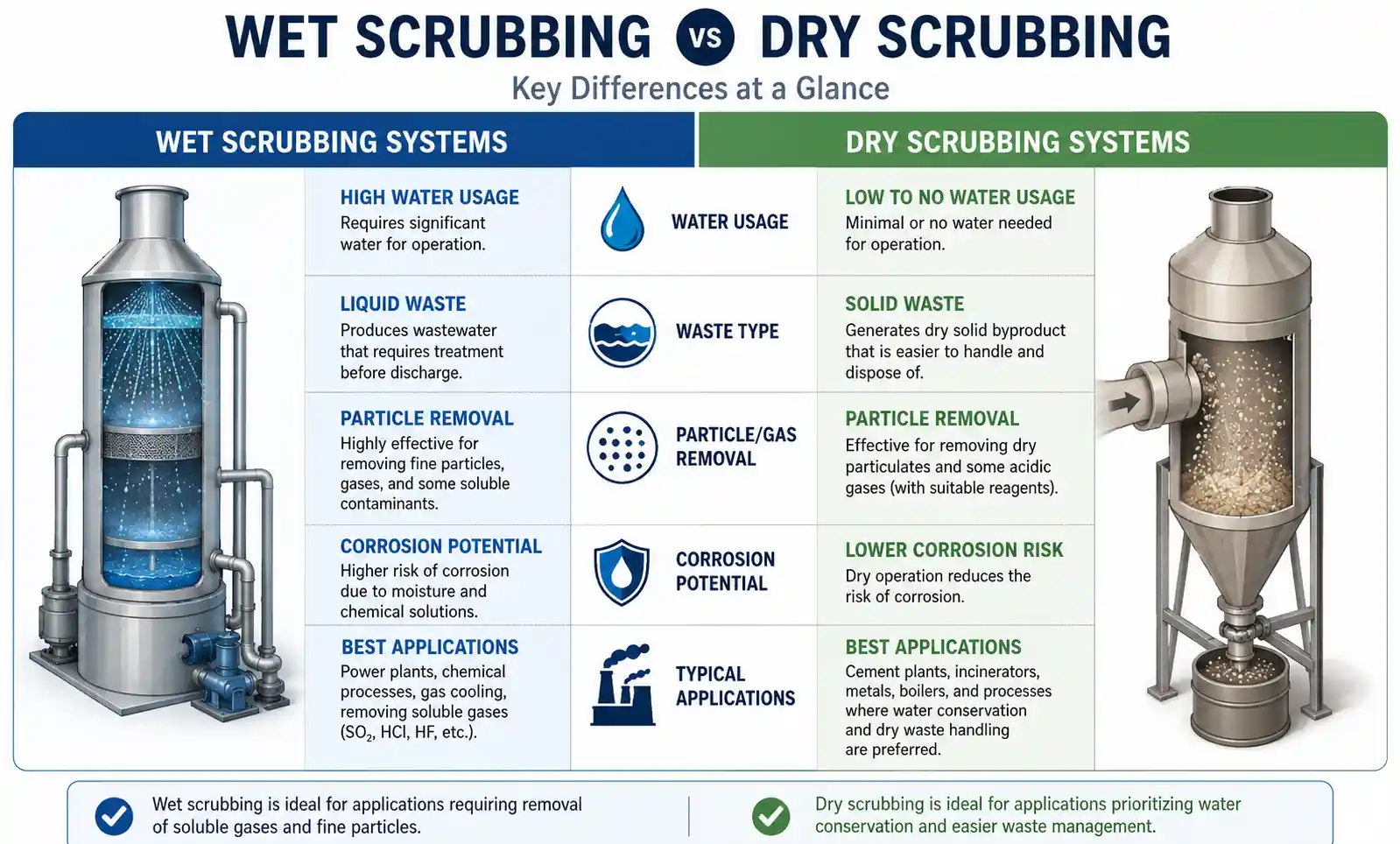
Understanding the core differences between wet and dry scrubbers helps you match the technology to your specific application requirements.

4-wet-vs-dry-scrubber-comparison-chart

Operating Medium

  • Wet scrubbers: Use water or chemical solutions
  • Dry scrubbers: Use solid powders or granular reagents

Water Consumption

  • Wet scrubbers: Require significant water supply
  • Dry scrubbers: Consume no water

Waste Generation

  • Wet scrubbers: Generate liquid wastewater requiring treatment
  • Dry scrubbers: Produce solid waste that's often easier to handle

Temperature Capability

  • Wet scrubbers: Excel with high-temperature gases, can cool exhaust
  • Dry scrubbers: Better for applications where cooling is undesirable

Pollutant Suitability

  • Wet scrubbers: Ideal for water-soluble pollutants, odor control, and particulate matter
  • Dry scrubbers: Effective for acid gases and applications requiring dry removal

Space Requirements

  • Wet scrubbers: May require larger footprint for liquid handling systems
  • Dry scrubbers: Generally more compact with simpler infrastructure

5. Efficiency Comparison

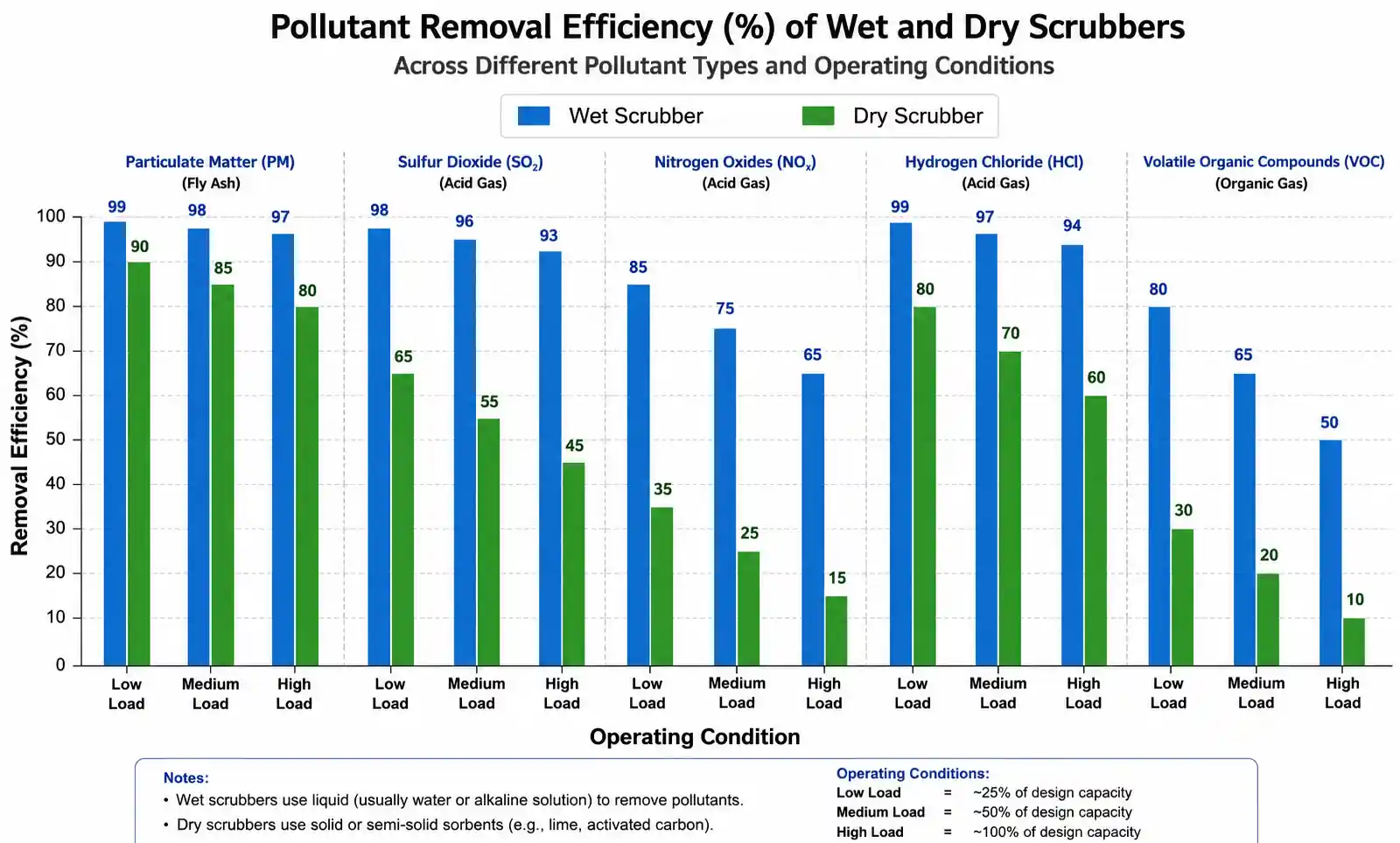
Both wet and dry scrubbers can achieve high removal efficiencies, but their performance varies depending on pollutant type and operating conditions.

Wet Scrubber Efficiency

Wet scrubbers demonstrate impressive removal rates across various pollutants. Most absorbers achieve removal efficiencies exceeding 90%, with many systems surpassing 95% depending on operating and ambient conditions. Well-designed wet scrubbers can maintain emission levels below 50 mg/Nm³ for particulate matter and 25 ppm for SO₂.

Venturi scrubbers, which use high-velocity gas acceleration, are particularly effective for fine particulate matter and water-soluble gases. The turbulent mixing enhances contact between pollutants and liquid droplets, maximizing capture efficiency.

5-scrubber-efficiency-performance-graph

Dry Scrubber Efficiency

Dry scrubbers also achieve high efficiency when properly designed for the target pollutants. They're especially effective for acid gas removal, with modern DSI systems removing 90% or more of sulfur dioxide and hydrogen chloride.

Efficiency depends on factors including:

  • Sorbent-to-pollutant ratio
  • Contact time between sorbent and pollutants
  • Temperature and humidity of the exhaust stream
  • Particle size distribution of the sorbent material

Factors Affecting Performance

For both systems, efficiency depends on proper design matching the facility's specific exhaust chemistry, flow rates, and space constraints. Under-designed systems fail to meet emission targets, while oversized systems waste energy and resources.

6. Cost Analysis: Initial Investment vs Operating Expenses

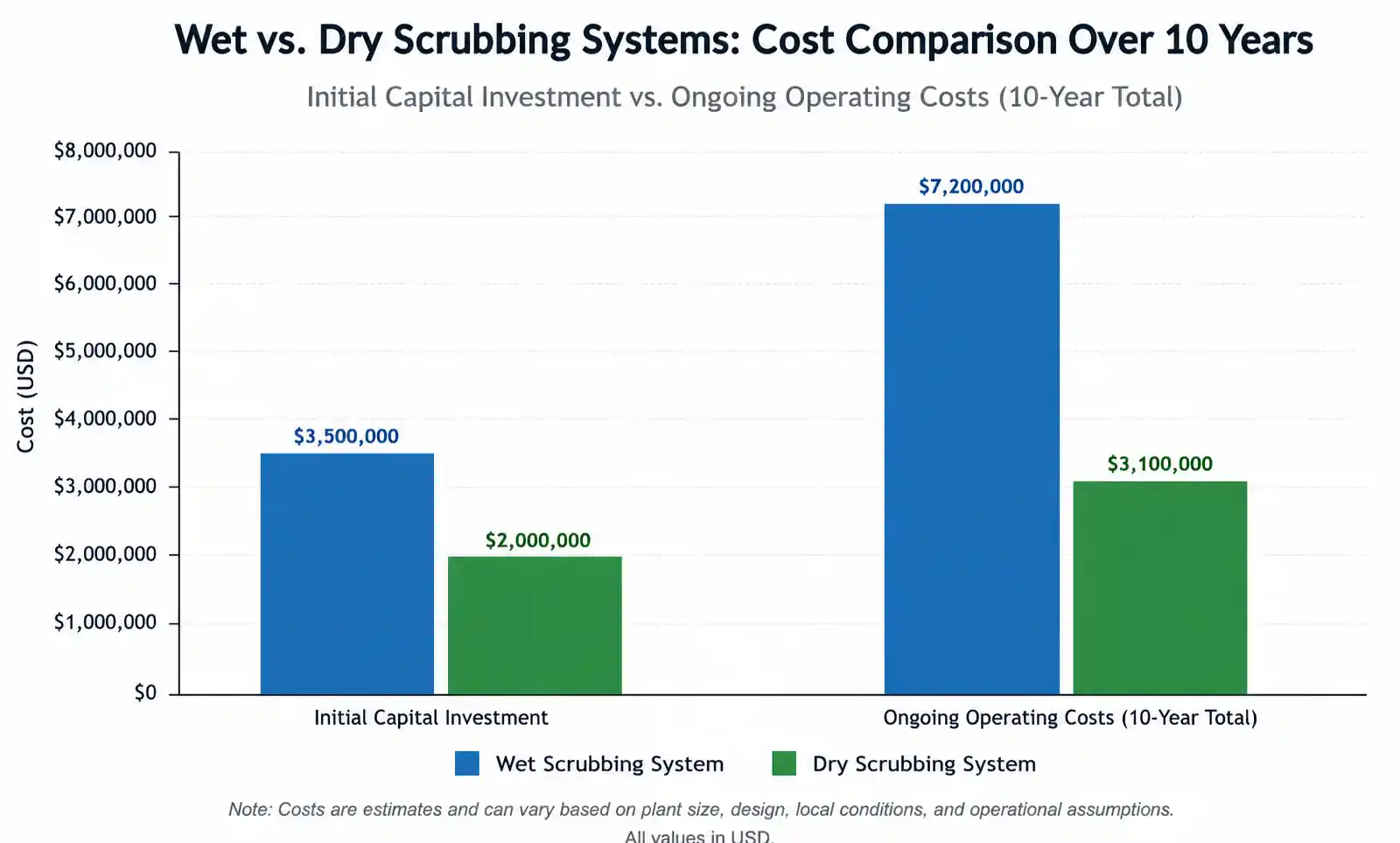
The total cost of ownership includes both upfront capital investment and ongoing operational expenses. Each scrubber type presents different financial considerations.

Initial Capital Investment

Wet scrubbers typically require higher initial investment due to:

  • Liquid handling and recirculation systems
  • Corrosion-resistant materials
  • Wastewater treatment infrastructure
  • More complex installation requirements

Dry scrubbers often have lower capital costs because of:

  • Simpler system design
  • No liquid handling equipment
  • Reduced infrastructure complexity
  • Faster installation timeline

6-scrubber-cost-comparison-analysis

Operating Costs

Wet scrubbers face ongoing costs including:

  • Water consumption (potentially substantial in water-scarce regions)
  • Energy for pumping and recirculation
  • Chemical additives for pH control or enhanced scrubbing
  • Wastewater treatment and disposal
  • Corrosion-related maintenance and replacement

Dry scrubbers incur costs for:

  • Sorbent material (continuous consumption)
  • Energy for fans and material handling
  • Filter bag replacement
  • Solid waste disposal

Cost Optimization

Research shows that proper design and optimization can dramatically reduce expenses. Well-engineered wet scrubber systems have achieved up to 96% reduction in total operations and maintenance costs compared to poorly designed systems. Energy costs can be reduced by up to 74% through optimized designs that minimize pressure drop while maintaining efficiency.

Long-Term Financial Considerations

In regions with abundant water and affordable wastewater treatment, wet scrubbers may offer lower operating costs despite higher initial investment. Conversely, in water-scarce areas or where water costs are high, dry scrubbers provide better long-term economics despite ongoing sorbent expenses.

7. Maintenance Requirements

Maintenance demands differ significantly between wet and dry scrubbing systems, affecting uptime, labor requirements, and long-term reliability.

Wet Scrubber Maintenance

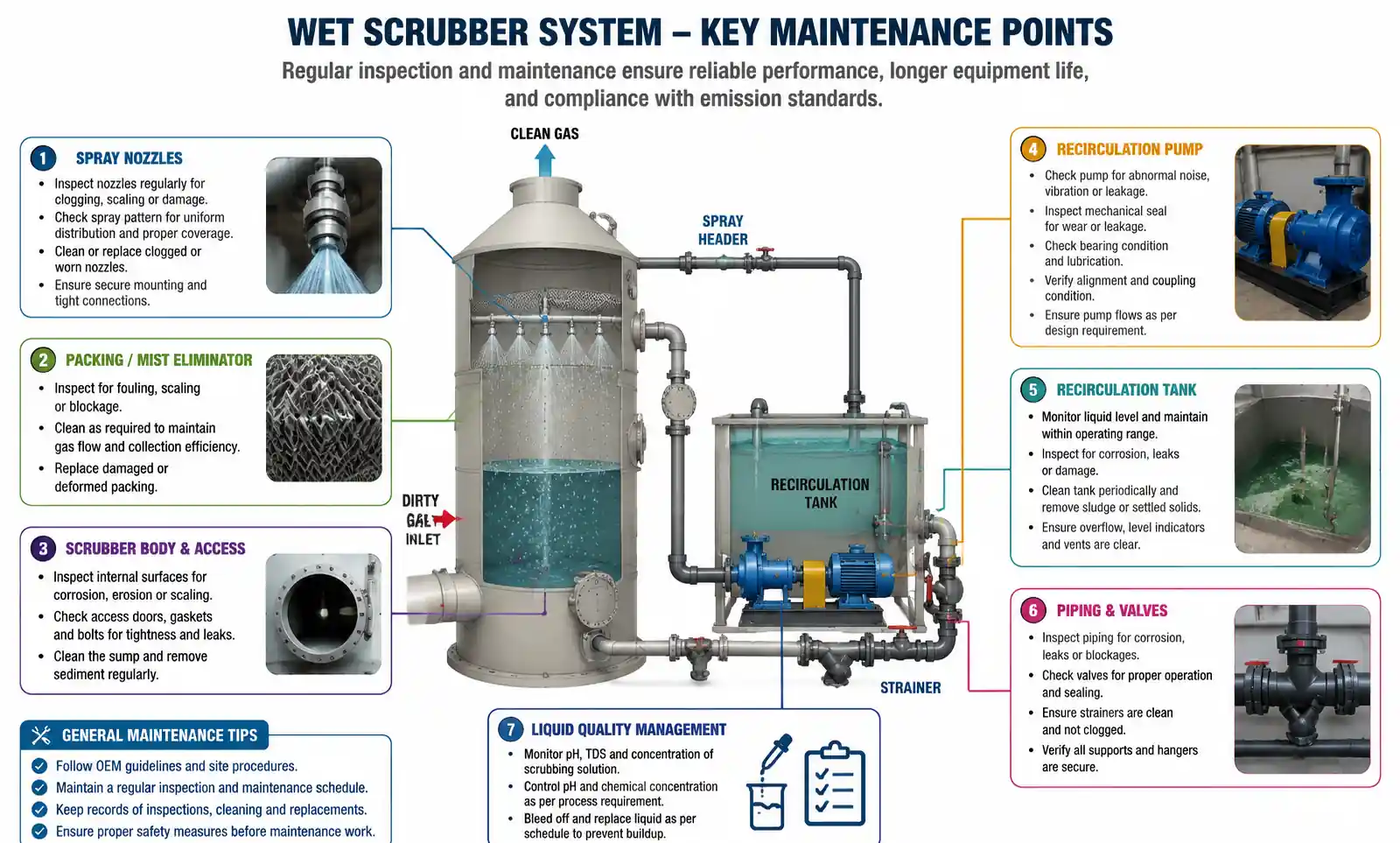
Wet scrubbers require careful ongoing attention to:

  • Liquid system maintenance: Pumps, spray nozzles, and recirculation systems need regular inspection and cleaning to prevent clogging
  • Corrosion management: Acidic or alkaline scrubbing liquids can corrode equipment over time, requiring use of corrosion-resistant materials and regular inspections
  • Biological growth control: Water systems can develop bacterial and fungal growth that affects performance and requires monitoring and treatment
  • Wastewater system upkeep: Treatment systems, pH control, and disposal infrastructure need continuous management

7-wet-scrubber-maintenance-checklist

Systems must be carefully matched to facility-specific exhaust chemistry, flow rates, and space constraints to avoid costly downtime, regulatory fines, and equipment damage. When properly designed and maintained, wet scrubbers operate continuously and reliably.

Dry Scrubber Maintenance

Dry scrubbers present different maintenance challenges:

  • Filter bag replacement: Fabric filters collecting reaction products require periodic replacement
  • Sorbent feed system: Material handling equipment needs regular inspection to ensure consistent flow
  • Dust accumulation management: Collection hoppers and conveyors require regular cleaning
  • No liquid system issues: Eliminates pump maintenance, corrosion concerns, and biological growth

Maintenance Cost Impact

While wet scrubbers may require more frequent attention to liquid systems, dry scrubbers incur costs for filter replacement and sorbent handling equipment. Total maintenance costs depend on system design quality, operating conditions, and facility-specific factors.

8. Industry Applications and Use Cases

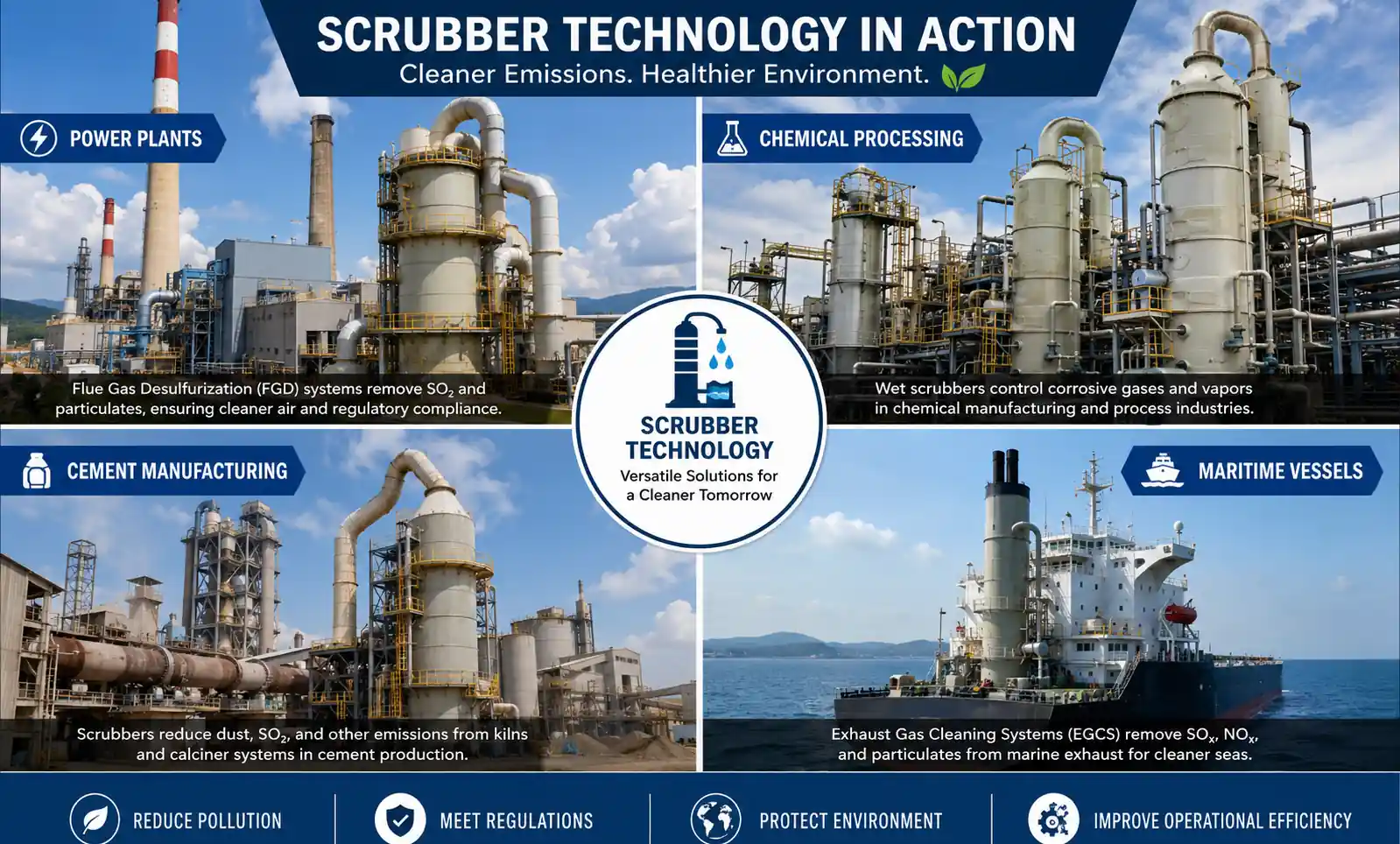
Different industries favor wet or dry scrubbers based on their specific pollutant profiles, water availability, and process requirements.

Wet Scrubber Applications

Wet scrubbers excel in industries dealing with:

  • Chemical processing: Removing acid gases, VOCs, and chemical vapors
  • Pharmaceutical manufacturing: Controlling odors and capturing fine particulates
  • Metal refining: Managing high-temperature gases and fumes
  • Waste incineration: Handling acid gases and particulate matter
  • Food processing: Odor control and grease particle removal

8-industrial-applications-scrubbers

Maritime shipping increasingly adopts wet scrubber technology (specifically marine scrubbers) to comply with sulfur emission regulations, with the dry marine scrubber systems market projected to grow from $1.3 billion in 2026 to $2.9 billion by 2035.

Dry Scrubber Applications

Dry scrubbers are preferred in:

  • Power generation: The dominant market segment, representing 17.5% of scrubber system share in 2025
  • Cement manufacturing: Moisture-sensitive processes requiring dry removal
  • Waste-to-energy facilities: Acid gas control without liquid waste
  • Metal fabrication: Capturing welding fumes and metal particulates
  • Water-scarce regions: Any application where water conservation is critical

Regional Market Trends

Asia Pacific dominates the scrubber market with 41% share in 2025, driven by industrial growth and tightening environmental regulations. North America is expanding rapidly, with strong growth expected through 2034. The global scrubber system market is projected to grow from $6.68 billion in 2026 to $11.91 billion by 2034, reflecting increasing environmental compliance demands worldwide.

9. Environmental Compliance Considerations

Meeting environmental regulations is a primary driver for scrubber system installation. Both wet and dry scrubbers help facilities comply with air quality standards, but they present different compliance considerations.

Regulatory Framework

Scrubbers help facilities meet limits for:

  • Particulate matter (PM2.5 and PM10)
  • Sulfur dioxide (SO₂) and other acid gases
  • Volatile organic compounds (VOCs)
  • Hazardous air pollutants (HAPs)

The U.S. EPA and corresponding international agencies monitor scrubber performance through continuous emission monitoring systems (CEMS) or periodic stack testing.

Compliance Advantages of Wet Scrubbers

Wet scrubbers offer compliance benefits including:

  • High removal efficiency for multiple pollutant types simultaneously
  • Ability to handle variable pollutant loads
  • Effective control of both particulate and gaseous emissions
  • Proven technology with extensive regulatory acceptance

Compliance Advantages of Dry Scrubbers

Dry scrubbers provide compliance through:

  • No liquid discharge permits required
  • Simplified waste management (solid vs liquid)
  • Consistent performance without biological interference
  • Lower risk of visible plume formation

Emission Monitoring Requirements

Both systems require proper monitoring to demonstrate ongoing compliance. Wet scrubbers need monitoring of:

  • Liquid flow rate and pH
  • Pressure drop across the scrubber
  • Stack emissions

Dry scrubbers require monitoring of:

  • Sorbent injection rate
  • Pressure drop across filters
  • Stack emissions

10. Making the Right Choice for Your Facility

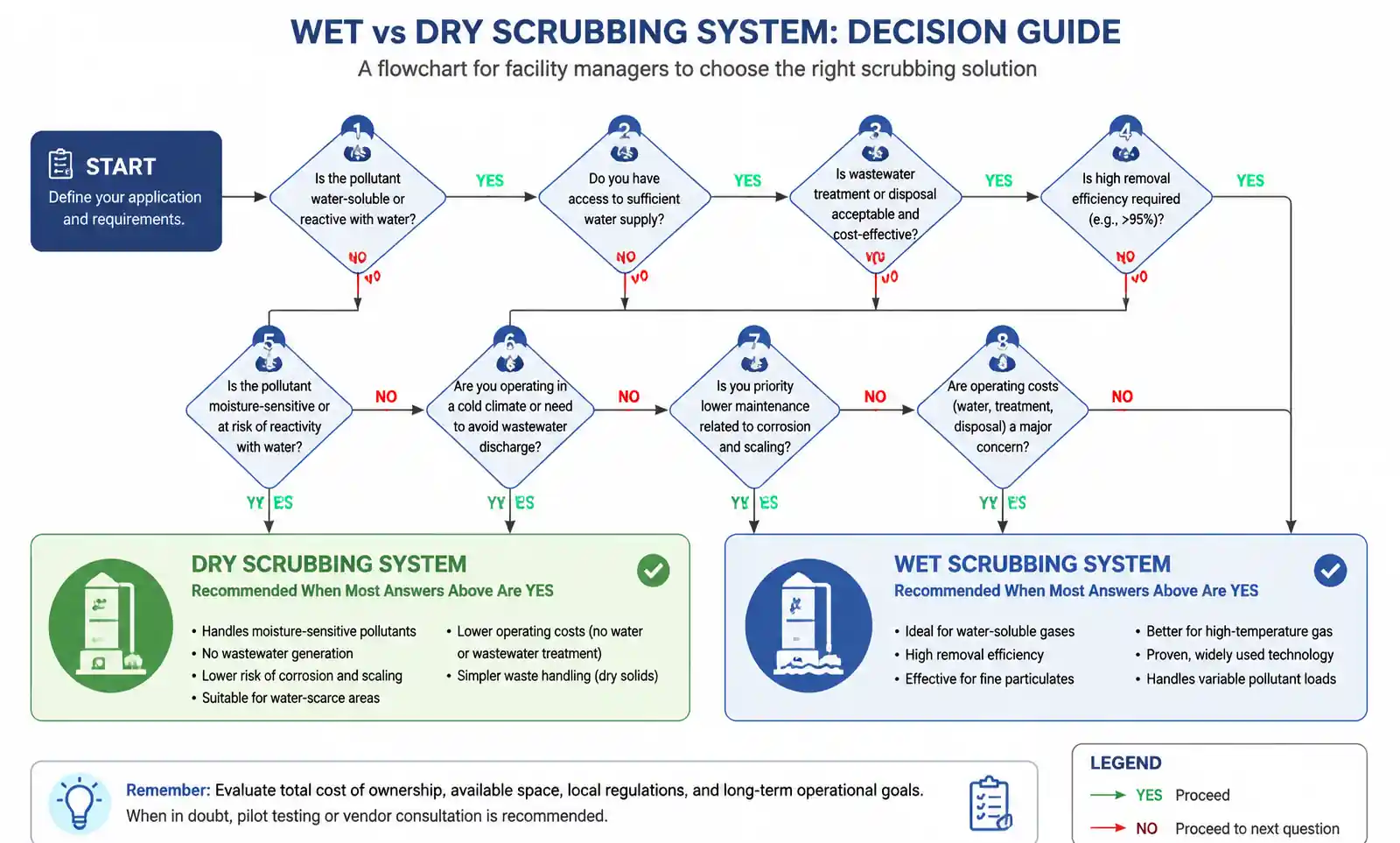
Selecting between wet and dry scrubbing systems requires careful evaluation of your facility's specific circumstances, operational requirements, and long-term goals.

9-scrubber-selection-decision-flowchart

Key Decision Factors

Consider these critical factors when choosing:

Pollutant characteristics: Water-soluble gases favor wet scrubbers; acid gases without water-soluble components may work well with dry systems.

Water availability: Abundant water supply supports wet scrubbers; water-scarce regions benefit from dry technology.

Temperature requirements: High-temperature gases that need cooling work well with wet scrubbers; processes requiring dry exhaust need dry scrubbers.

Waste management infrastructure: Existing wastewater treatment favors wet scrubbers; solid waste handling capability suits dry scrubbers.

Space constraints: Limited space may favor more compact dry scrubber designs.

Capital budget vs operating budget: Higher upfront budget with lower operating costs may favor wet scrubbers in some regions; lower capital with ongoing sorbent costs characterizes dry scrubbers.

When to Choose Wet Scrubbers

Select wet scrubbers when you need:

  • Multi-pollutant removal (particulate + gases)
  • High-temperature gas cooling
  • Odor control capabilities
  • Maximum removal efficiency for water-soluble pollutants
  • Handling of sticky or hygroscopic particulates

When to Choose Dry Scrubbers

Select dry scrubbers when you need:

  • Water conservation
  • Simplified waste management
  • Moisture-sensitive process requirements
  • Lower capital investment
  • Acid gas removal without liquid waste

Hybrid Approaches

Some facilities employ both technologies in series, using dry scrubbers for primary acid gas removal followed by wet scrubbers for polishing or particulate capture. This approach optimizes the strengths of each technology while minimizing individual weaknesses.

Consult with Experts

Given the complexity and financial implications, consulting with air pollution control specialists ensures your scrubber selection matches your facility's unique requirements. Proper design, sizing, and specification prevent costly mistakes and ensure long-term compliance and operational success.

Conclusion

Both wet and dry scrubbing systems effectively control industrial air pollution, but they suit different applications and operating environments. Wet scrubbers excel at removing water-soluble pollutants and handling high-temperature gases, though they require water supply and wastewater management. Dry scrubbers conserve water and simplify waste handling, making them ideal for water-scarce regions and moisture-sensitive processes.

Your choice should be based on careful analysis of pollutant characteristics, water availability, regulatory requirements, capital and operating budgets, and long-term facility goals. By matching the technology to your specific needs, you'll achieve reliable emissions control, regulatory compliance, and optimized total cost of ownership.